

When Two Calendars Collide
One has remained constant for millennia. The other has changed dramatically within a generation.

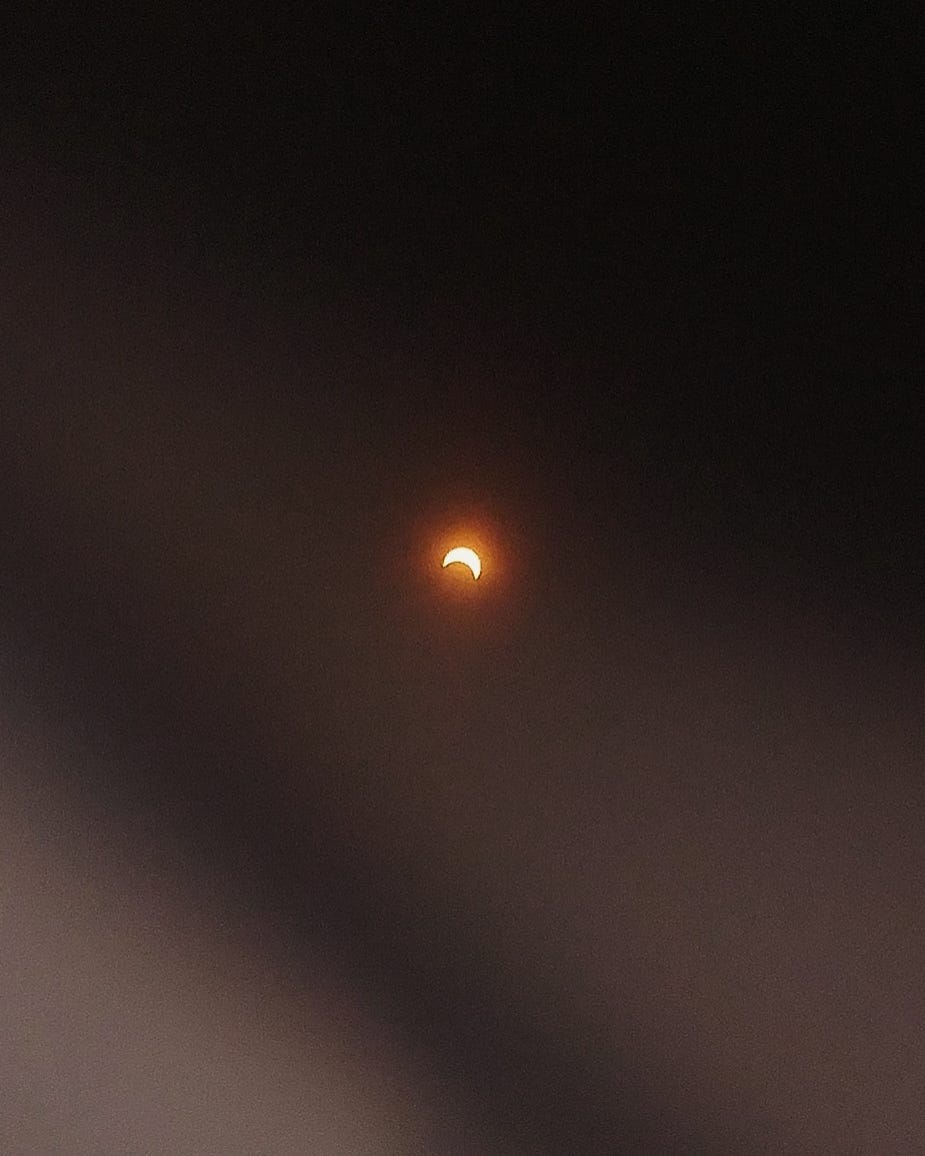
Today is an unusual day in Champagne.
This morning, the Comité Champagne published the 2026 ban des vendanges, officially authorising growers across the appellation to begin harvesting their grapes. This evening, much of Europe will turn its attention skyward as a partial solar eclipse passes across the Sun. Although separated by only a few hours, these two events belong to very different calendars. One has remained remarkably constant for millennia. The other has changed dramatically within a generation.
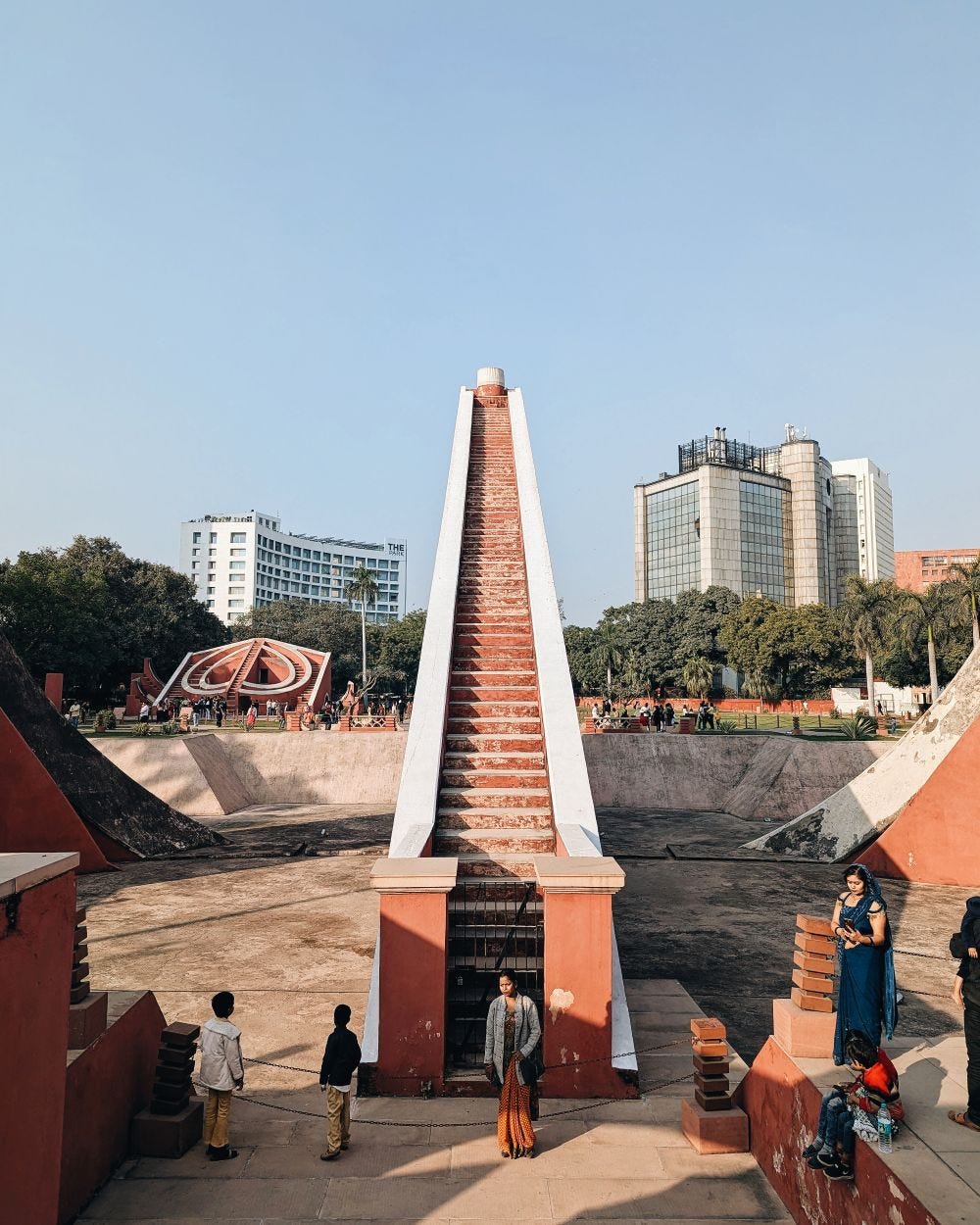
For thousands of years, the sky served as humanity’s first calendar. The movements of the Sun, Moon, and stars marked the passing of seasons, guided agricultural work, and helped civilizations understand the world around them. A solar eclipse was among the most extraordinary events imaginable, inspiring mythology, religion, and scientific curiosity in equal measure. Today, we understand eclipses with remarkable precision. Their timing can be calculated centuries in advance, making them among the most predictable natural phenomena we experience.
Champagne’s harvest calendar tells a different story.
Reading Champagne’s Changing Calendar
For those unfamiliar with Champagne, the ban des vendanges is the official authorisation to begin harvesting grapes. Published each year by the Comité Champagne, it establishes the first day on which growers in each commune may begin picking their fruit, based on grape maturity. Different villages, grape varieties, and even individual parcels may begin harvesting on different dates, reflecting the remarkable diversity of Champagne’s terroirs.
Most people think of the ban des vendanges as an administrative announcement. In reality, it is also one of Champagne’s most fascinating historical records. Published every year, it quietly documents the changing rhythm of the growing season. Read over decades, those dates reveal how one of the world’s most celebrated wine regions has responded to a warming climate.
The 2026 ban des vendanges confirms what many growers had suspected for weeks. Harvest officially begins on 12 August, although history had already been made several days earlier when Chardonnay was harvested in Montgueux on 6 August, the earliest harvest ever recorded in Champagne. Across the region, the first official dates range from 12 August in the Aube and Marne, to 13 August in Haute-Marne, 14 August in the Aisne, and 17 August in Seine-et-Marne, reflecting differences in ripening from one area to another.
Looking back over the past decade, the progression is remarkable. In 2013, harvest officially began on 24 September. In 2016, it began on 10 September. Last year, the official start was 22 August. This year, it is 12 August. Every ban des vendanges becomes another entry in Champagne’s climate archive. Individually, they announce the start of harvest. Collectively, they document the changing rhythm of an entire wine region.
When Two Calendars Meet
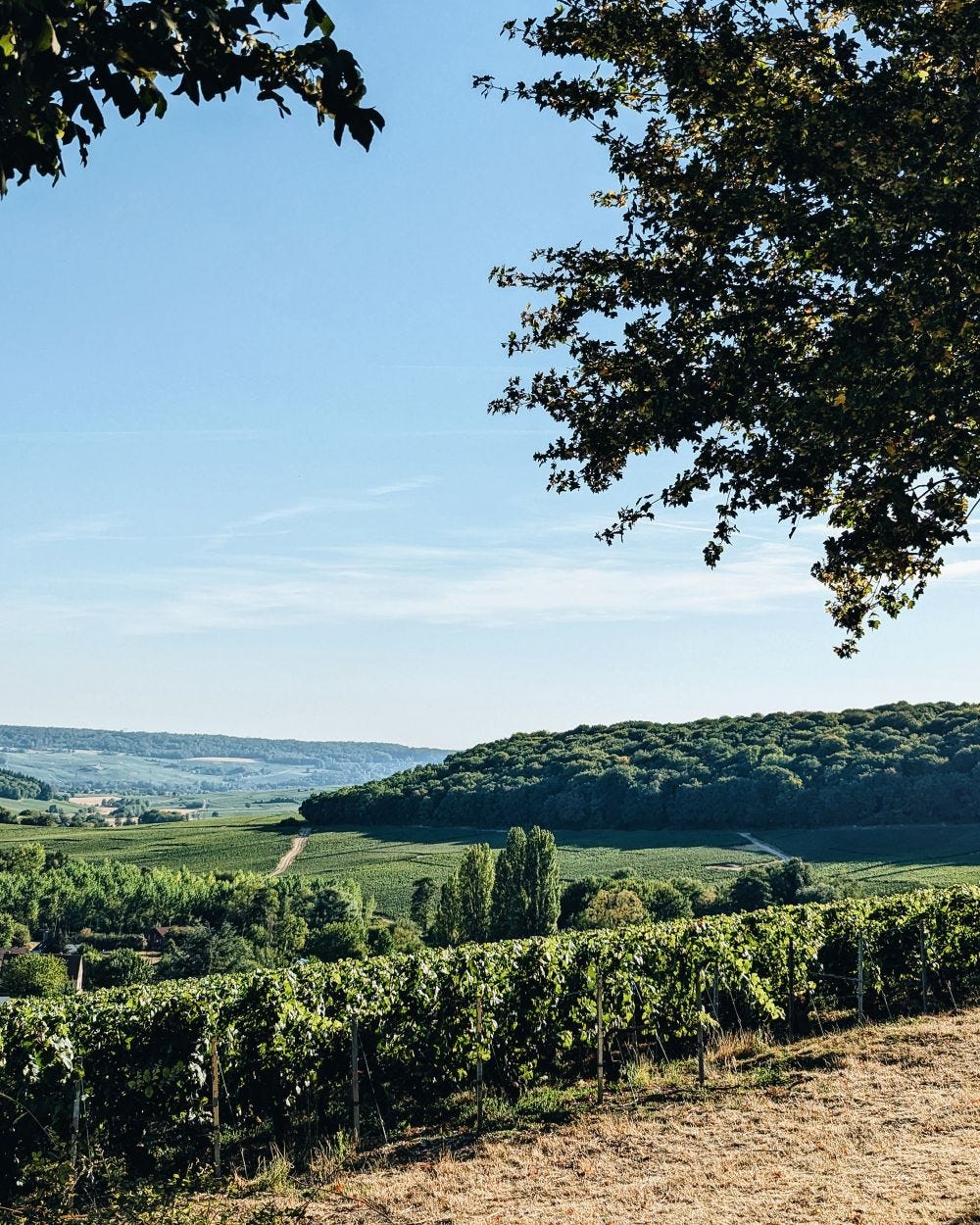
At first glance, the celestial calendar and Champagne’s harvest calendar seem to belong to different worlds. One follows the movement of the Earth, Moon, and Sun. The other follows the ripening of grapes.
Viticulture, however, has never completely separated the two.
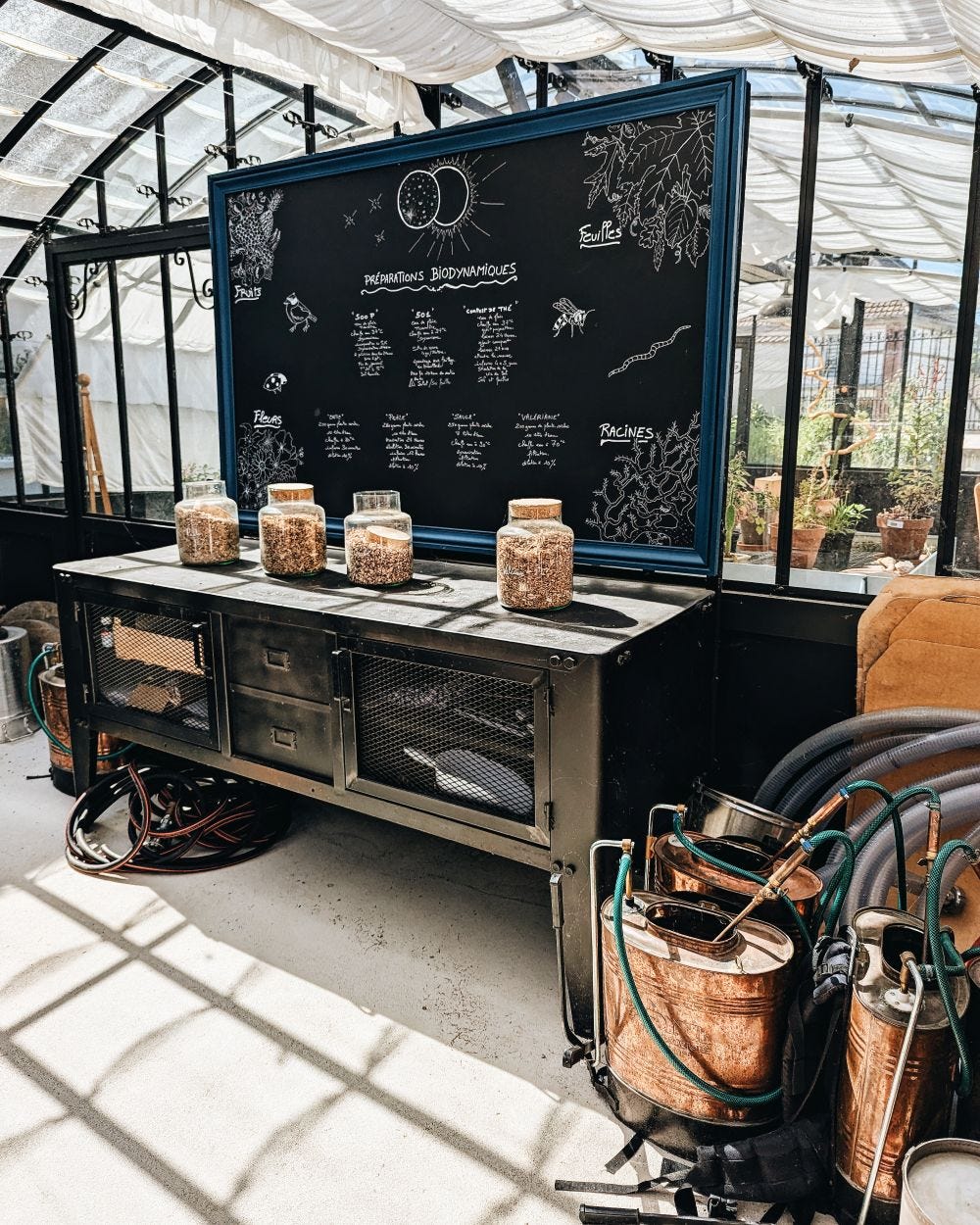
Among growers who practise biodynamics, astronomical rhythms remain part of everyday decision-making. While the phases of the Moon are perhaps the best known, biodynamic calendars are considerably more sophisticated. They distinguish between ascending and descending moons, waxing and waning phases, root, leaf, flower, and fruit days, lunar nodes, and other astronomical events, each believed to favour different activities in the vineyard or cellar. Depending on the philosophy of the grower, these calendars may influence when to prune, cultivate soils, apply biodynamic preparations, harvest grapes, or bottle wine.
Today’s eclipse occupies a particularly interesting place within that tradition. Many biodynamic calendars recommend avoiding vineyard and cellar work during eclipses and lunar nodes altogether, considering them moments when normal rhythms are temporarily disturbed. Rather than being viewed as favourable times for intervention, they are often treated as opportunities to observe rather than act.
Whether one embraces biodynamics or remains skeptical, it reflects a tradition that stretches back thousands of years. Agriculture has always looked beyond the vineyard itself for guidance.
Yet the calendar telling the most compelling story in Champagne today is not a lunar one.
It is the ban des vendanges.
While biodynamic calendars help some growers decide when to work, the ban des vendanges has quietly become a record of how the vineyard itself is changing.
Reading the Vineyard
The publication of the 2026 ban des vendanges was accompanied by a series of remarkable climate records that help explain why this growing season has unfolded so differently from those of the past. The Comité Champagne confirmed the highest average January-to-June temperature on record at 11.83 °C, the highest average June-to-July temperature ever recorded at 29.25 °C, surpassing even the famous heatwave of 1976, and the highest June-July potential evapotranspiration ever measured at 321 mm.
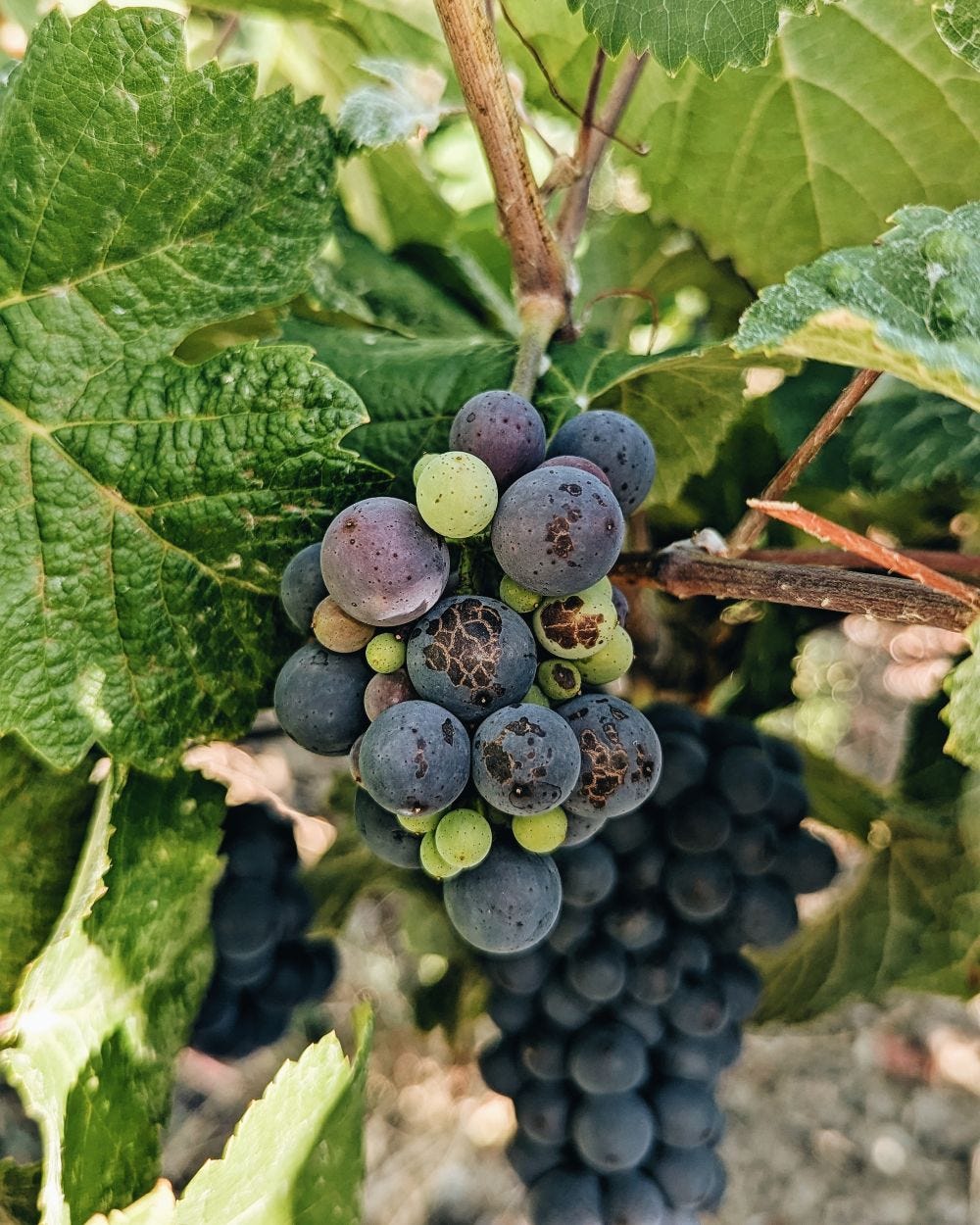
Those figures confirmed much of what I had observed while visiting vineyards across Champagne over the past several weeks. Millerandage was widespread across Chardonnay, Pinot Noir, and Meunier, with many bunches so small they fit comfortably in the palm of my hand. Secondary growth was common, and in some vineyards tertiary bunches were still flowering as the primary crop approached harvest.
The official figures also help explain these observations. Earlier vine development, compressed ripening, smaller berries, widespread water stress, and an exceptionally early harvest are no longer isolated events. They are measurable consequences of an extraordinary growing season.
The announcement also brought another revision to the commercial yield. Originally set at 9,000 kg/ha, it was reduced to 8,000 kg/ha in July following the first heatwave. It has now been lowered again to 7,000 kg/ha, while acknowledging that the final figure may fall further depending on bunch weights and the continuation of the current heatwave.
The statistics did not reveal anything the vineyards had not already begun to show. Rather, they provided official confirmation that 2026 is no ordinary vintage.
The Vineyard as a Witness
One calendar measures time. The other measures change.
A vineyard can never be separated from the world around it. Every frost, every heatwave, every drought, every rainfall event, and every hour of sunshine leaves its mark on the vine. Unlike many human activities, viticulture cannot be insulated from nature. It must respond to it, year after year, vintage after vintage.
That is what makes the ban des vendanges so much more than an administrative announcement. It tells growers when they may begin harvesting, but it also preserves a record of how the vineyard responded to a particular growing season. Read over decades, those annual announcements become something far more valuable. They reveal the changing rhythm of one of the world’s most celebrated wine regions and, with it, a changing climate.
Perhaps that is why today’s coincidence feels so fitting. A solar eclipse reminds us to look skyward, just as our ancestors once did to understand the passage of time and the changing seasons. Champagne’s vineyards invite us to look back at the landscape with the same sense of curiosity. The vine has always been shaped by the world around it. If we pay attention, it also tells us how that world is changing.